Are you dreaming of an unforgettable African safari? Wondering when to visit? The right time can greatly impact your wildlife sighting experience. Africa’s vast landscapes have two main seasons: the dry and wet seasons. It’s key to match your travel dates with your safari goals for the best animal sightings.
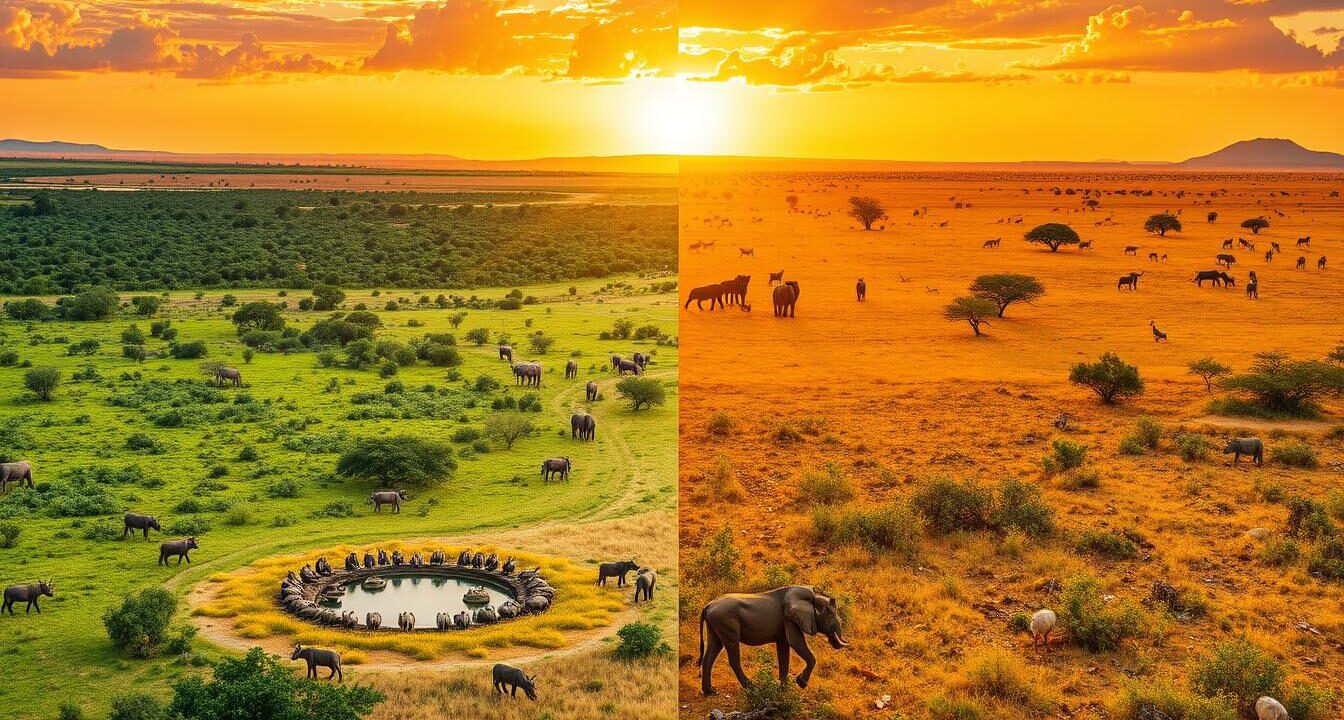
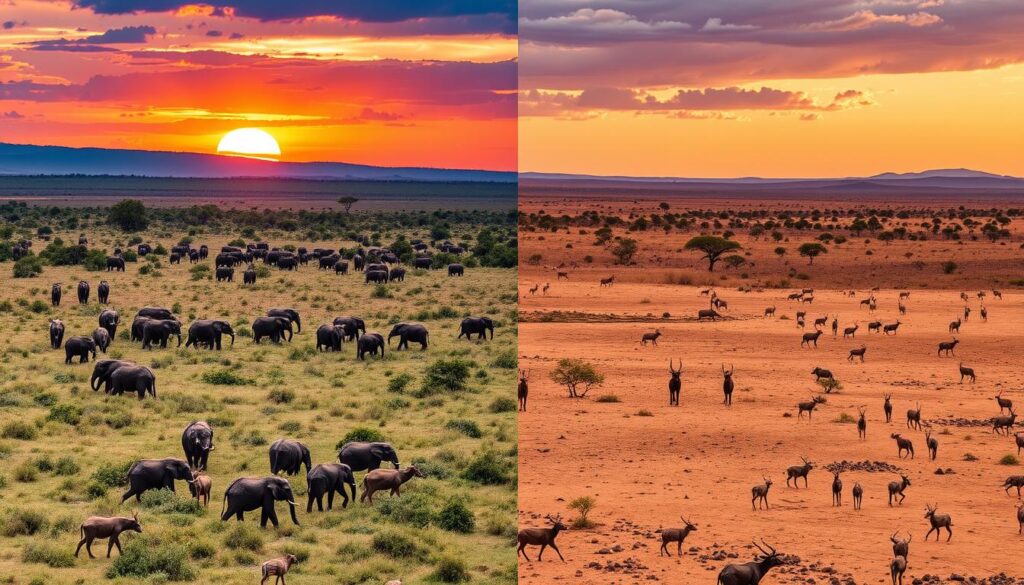
The dry season, from May to October, is the top time for wildlife viewing. Animals gather near water sources, making them easier to see. The bush is also less dense, giving clearer views. On the other hand, the wet season, from November to April, brings lush landscapes and more migratory birds. However, wildlife can be harder to find due to thicker vegetation and animals being more spread out. Each region in Africa has its own peak seasons, so it’s vital to research and plan your travel dates accordingly.
Key Takeaways
- The dry season, from May to October, is the prime time for wildlife sighting as animals congregate around fewer water sources.
- The wet season, from November to April, offers lush landscapes and more migratory birds, but wildlife can be harder to spot.
- Each region in Africa has its own unique peak seasons, so research and plan your travel dates to align with your safari goals.
- Factors like rainfall, animal migrations, and vegetation conditions can impact the best time to visit a specific destination.
- Seeking personalized travel itineraries can help you optimize your safari experience and discover unique experiences beyond traditional tourist routes.
Understanding Africa’s seasons and wildlife patterns can help you plan your ultimate safari adventure. This way, you can increase your chances of seeing the breathtaking natural wonders Africa offers. To make your safari even better, look into personalized travel itineraries that fit your interests and preferences.
Understanding Africa's Seasons and Wildlife Patterns
Exploring Africa’s seasons and wildlife is key to a memorable dry season safari or wet season safari. The continent’s varied climate, from deserts to rainforests, greatly influences the seasonal wildlife patterns seen by travelers.
Dry Season vs. Wet Season
The dry season, from May to October, brings minimal rain and clear safari viewing conditions. With less vegetation, animals gather at water sources, making them easier to spot. This is the best time to see many species, including elephants and predators.
The wet season, from November to April, turns landscapes green and lush. Though game drives can be harder due to dense foliage, it’s great for bird watching and seeing newborn animals. The scenery is stunning, making for a unique safari experience.
“Understanding Africa’s seasonal patterns is the key to aligning your travel dates with your safari goals and ensuring an unforgettable experience.”
Knowing Africa’s climate and its effect on seasonal wildlife patterns helps plan the best safari. This way, travelers can see the amazing fauna during the prime safari viewing conditions.
Regional Variations in Safari Seasons
Planning your safari adventure in Africa means knowing the seasonal changes. The continent’s weather patterns divide north to south. But, the best safari seasons vary by region.
Aligning Your Travel Dates with Your Safari Goals
In East Africa, the dry season is from late June to October. This is the best time to see wildlife, as they gather at water sources. You can also see the Great Migration in the Serengeti-Mara.
Southern Africa is great for game viewing from May to October. The dry months offer clear views of animals.
Central Africa has safaris all year, but they change with the seasons. The dry season, from June to August, is best for spotting wildlife. The wet season, from September to May, is perfect for birdwatching and seeing newborn animals.
Choosing the right time for your safari depends on what you want to see. Planning around seasonal changes helps you see Africa’s amazing sights.
The best time for safari: Tracking the Great Migration
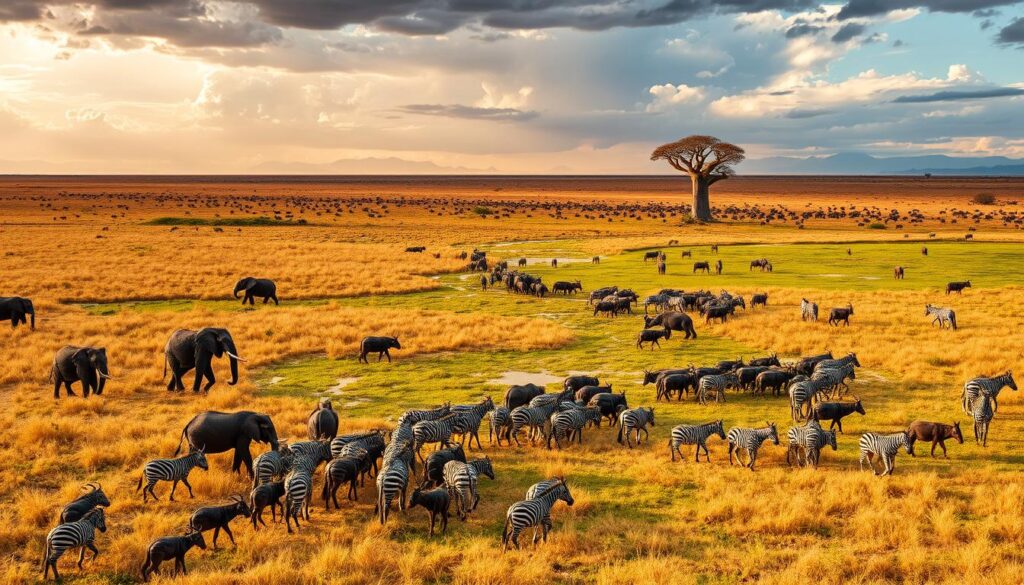
The Great Migration is a breathtaking natural spectacle that draws many safari enthusiasts to Africa. This annual movement of millions of wildebeest, zebra, and gazelle across the Serengeti-Mara ecosystem is a sight to behold. The best time to witness this phenomenon is from July to October, when the herds traverse the region in search of fresh grazing grounds and water.
The dramatic river crossings, complete with crocodile encounters and perilous swims, often peak in late July to September. While the Great Migration is a year-round event, the summer months offer the most iconic and awe-inspiring scenes. Booking your Great Migration safari with knowledgeable guides can increase your chances of witnessing these momentous events up close, as the exact timing can vary depending on nature’s rhythms.
“The annual movement of wildlife in the Serengeti-Mara ecosystem involves 1.5 million wildebeest, 200,000 zebra, 18,000 eland, and 500,000 Thompson’s gazelle.”
The wildebeest migration is a year-round event, with different highlights in each month. In February, over 80% of fertile female wildebeest give birth to their calves within a few weeks of each other, totaling over 500,000 newborn wildebeests. As the herds move northward, they face the challenge of crossing the crocodile-infested Grumeti River in the Western Serengeti during the first half of June.
River crossings, considered the most exciting events of the Great Migration, usually start in July. The migration gathers momentum in July with huge herds spread out across the Western corridor before arriving in the North. August marks the second challenge of the Great Mara River, where many wildebeest perish but are compensated by the thousands of calves born during this period.
The herds are mostly concentrated in the Maasai Mara in Kenya during September, the northernmost range of their trek, with some wildebeest remaining in the Serengeti. October sees the wildebeest facing the swollen waters of the Mara River for the second time on their journey back south.
By planning your safari during the peak Great Migration season, you can increase your chances of witnessing this natural wonder up close, as the exact timing can vary depending on nature’s rhythms. Whether you’re a seasoned safari-goer or a first-time visitor, the best time to see the Great Migration is an experience you won’t soon forget.
Prime Bird Watching Periods Across Africa
Africa is a paradise for birders, with many different bird species. The best time for African bird watching changes with the season and location. Traveling during the peak migratory bird patterns increases your chances of seeing many prime birding destinations.
East Africa's Rainy Season
The rainy season in East Africa, from March to May, is perfect for bird watching. It’s when birds nest and breed, attracting many colorful species. You can see flamingos at Lake Nakuru and weaver birds in their full glory during this time.
Southern Africa's Summer Months
In Southern Africa, the summer from November to April is the best time for bird watching. Birds from Europe and Northern Asia migrate here, adding to the local bird life. Countries like Botswana, Namibia, and South Africa offer great summer bird watching experiences.
While these seasons are a good guide, the exact timing can vary. Talking to local experts can make your bird watching adventure even better. They can help you see all the amazing birds Africa has to offer.
Conclusion
Choosing the right time for your African safari is key to a great experience. Africa has two main seasons: the dry and wet seasons. Each season has its own benefits and things to consider.
The dry season, from May to October, is best for seeing animals. They gather near water, making them easier to spot. The wet season, from November to April, brings green landscapes and is great for birdwatching. However, it can be harder to see animals because of the dense plants.
Every region in Africa has its own best times for safaris. It’s vital to plan your travel dates carefully. This way, you can see the Great Migration, enjoy beautiful views, or explore quiet places. Knowing the seasons helps plan a memorable safari that fits your interests.
If you’re looking for tips on planning your safari, want to know the best times to visit Africa, or just want to learn about the seasons, this info is for you. It will help you make the most of your trip and create lasting memories.
FAQ
What are the best times for an African safari?
The best time for an African safari depends on where you are and what you want to see. The dry season, from May to October, is great for spotting animals. This is because they gather near water sources, making them easier to find.
But, the wet season from November to April has its own perks. The landscapes are lush, and you can see newborn animals and lots of birds.
How do the dry and wet seasons affect safari experiences?
In the dry season, the plants are thinner, giving you a better view of animals. They also gather near water, making them easier to see. On the other hand, the wet season brings green landscapes and lots of birds. But, it can be harder to spot animals because they are spread out.
Are there regional differences in the best safari seasons?
Yes, the best times for safaris vary by region in Africa. In East Africa, the dry season from late June to October is the best for seeing wildlife. This includes the Great Migration.
In Southern Africa, the dry months from May to October are perfect for game viewing. Central Africa’s rainforests and vast landscapes are great for safaris all year. But, the experience changes a lot between the dry and wet seasons.
What is the best time to witness the Great Migration?
The best time to see the Great Migration is from July to October. This is when millions of wildebeest, zebra, and gazelle move across the Serengeti-Mara ecosystem. They look for new grazing and water, often making dramatic river crossings.
When is the best time for bird watching in Africa?
The best time for bird watching in Africa changes by region. In East Africa, the rainy season from March to May is great for seeing many bird species. In Southern Africa, the best time is from November to April, when birds from Europe and Northern Asia migrate.
In West Africa, the end of the rainy season, from September to November, is perfect for bird watching.

Recent Post
Escape Winter: Warm Countries in February
- October 31, 2024
- 9 min read
Plan Your Dream Vacation with Our Itinerary
- October 31, 2024
- 8 min read
Plan Your Dream Vacation with Trip Planning
- October 30, 2024
- 8 min read