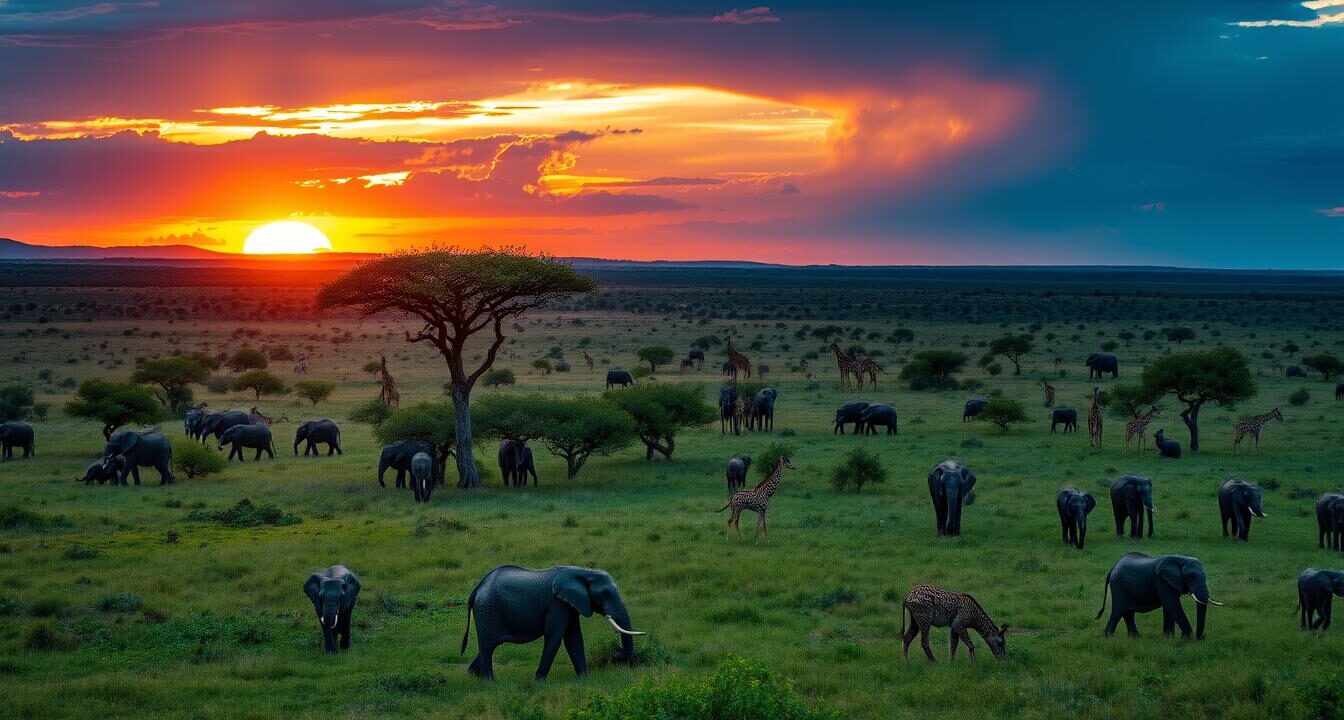
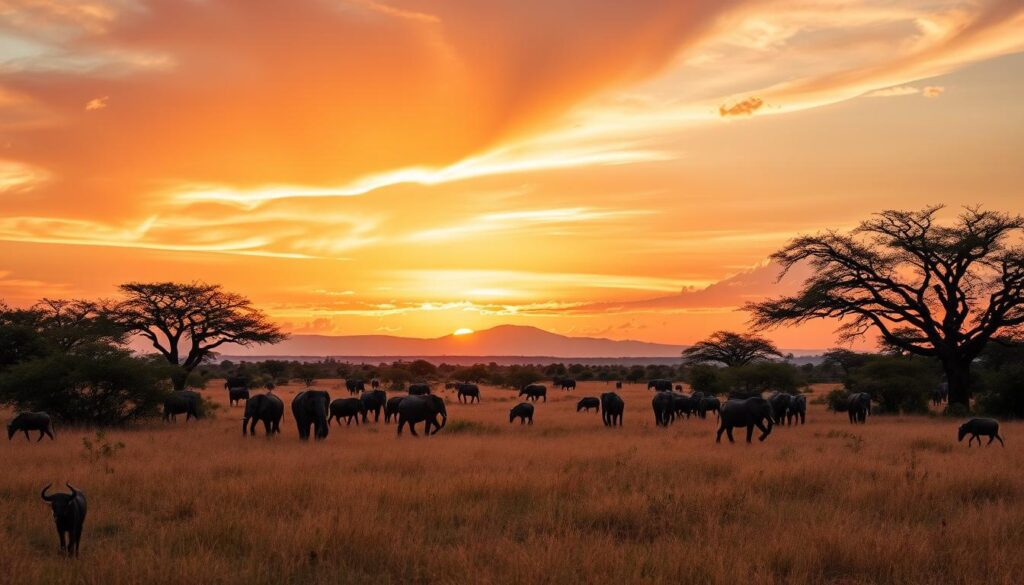
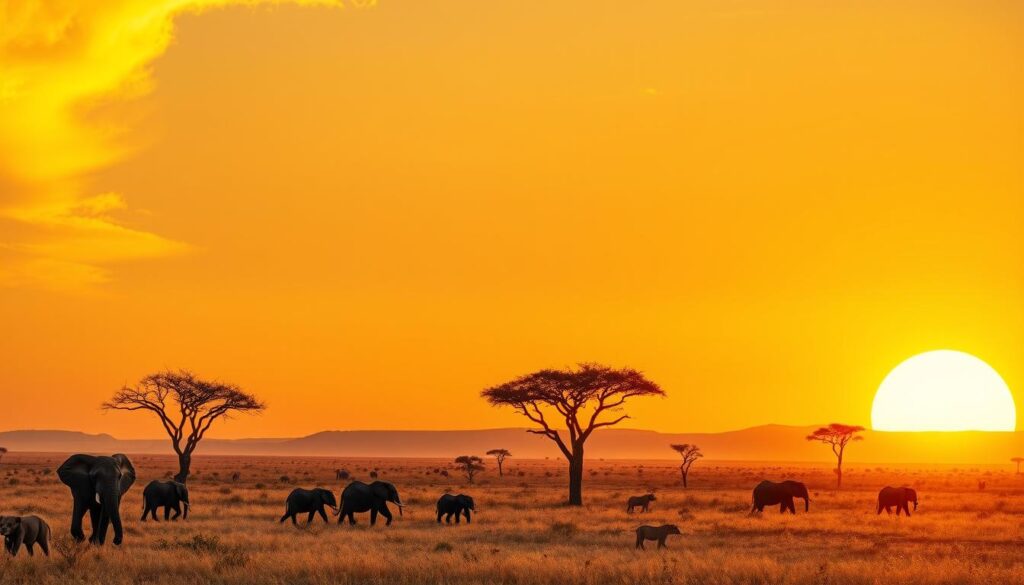
Remembering my first safari in the Serengeti brings back amazing memories. I saw a lion in the golden light, elephants in the lush green, and the great wildebeest migration. These moments are unforgettable, showing why Africa’s safaris are special.
If you’re planning your African safari, timing is key. The best time to go varies by region, weather, and wildlife migration. This guide will help you find the best seasons for wildlife, weather, and more to plan your safari.
Key Takeaways
The best time to visit Africa for a safari depends on the region, weather patterns, and wildlife migration cycles.
East African safaris offer prime wildlife viewing during the annual wildebeest migration, with the best months varying by location.
Southern African safaris thrive during the dry winter months, when animals congregate around permanent water sources.
Timing is crucial for witnessing specific events, such as the Okavango Delta’s high water levels or the mating of Southern Right Whales.
Advance planning and research are essential to ensure you maximize your safari experience during the optimal season.
Introduction
Planning an African safari requires careful timing. The season you choose affects the animals you see, the weather, and the crowds. Knowing the best times to visit is key to a great safari.
Factors Influencing the Best Time: Migration Patterns, Weather, and Accessibility
Several things affect the ideal safari season in Africa. These include animal migrations, weather, and how easy it is to get to different places. The Great Migration in East Africa and the Okavango Delta’s water levels are important. So is the rainy and dry seasons across Africa.
“June to October is considered the best time to visit Botswana for a safari due to high wildlife activity and water levels in the Okavango Delta.”
Knowing how weather and migration impact African safari timing is key. The dry season, from June to October, is great for safaris. Animals gather at water sources, making sightings easier. The rainy season offers lush greenery and fewer people, perfect for photos.
The factors affecting best time for an African safari are complex. The ideal safari season in Africa changes based on your goals and where you want to go. By understanding these, you can plan your safari for the best time for wildlife, weather, and experience.
Best Time for East African Safaris
Tanzania is famous for the Serengeti National Park and the Great Migration. It offers amazing safari experiences. The best time to visit tanzania for safari is from January to September. This is when you can see the wildebeest, zebra, and other animals on the move.
Kenya is also a top spot for East African safaris. The Masai Mara National Reserve is legendary. The best time to visit kenya for safari is from June to October. This is when you can see the most wildlife.
Tanzania: The Great Migration Calendar
The Great Migration in Tanzania’s Serengeti is a must-see. The wildebeest, zebra, and other animals move in a cycle. The best time to see this is in late January and early February.
Kenya: Masai Mara and Beyond
Kenya’s Masai Mara National Reserve is known for its wildlife and Mara River crossings. The best time to visit is from June to October. This is when you can see the most wildlife and exciting predator-prey interactions.
Best Time for Southern African Safaris
Exploring Southern Africa’s diverse landscapes and wildlife is a dream for many. Botswana’s Okavango Delta and Namibia’s deserts are top spots. Let’s look at the best times to visit these amazing safari destinations.
Botswana: Exploring the Okavango Delta
The Okavango Delta, a UNESCO World Heritage Site, is a wildlife lover’s dream. The best time for an Okavango Delta safari depends on what you want. The dry season, from May to October, is usually the best. During this time, the water recedes, making wildlife easier to see.
The peak season is June to September. You can see the annual wildebeest and zebra migrations. You’ll also see elephants, lions, leopards, and rare aquatic species.
Namibia: Desert Adventures and Wildlife
Namibia is known for its vast deserts and unique wildlife. The best time to visit Namibia for safari is the dry season, from May to October. This is when animals gather around water, making them easier to spot.
The ideal months for a Namibia desert safari are June to September. The weather is mild, and you can see desert-adapted wildlife like the oryx. The landscapes are perfect for photos, especially during sunrise and sunset.
best time to visit africa safari
South Africa: From Kruger to the Cape
South Africa is known for its varied landscapes and top-notch safari spots like [https://travel.goairoam.com/when-to-go-on-an-african-safari-adventure/Kruger National Park]. The best time to visit south africa for safari is from May to October. This is when the dry season makes wildlife easier to see.
The optimal season for kruger national park safari is during this time. Animals gather near water, making them easier to spot.
For those interested in the Cape Town and Garden Route, the ideal months are November to March. The weather is warm and sunny, ideal for coastal adventures and wildlife spotting. This is also the best time for whale watching in South Africa.
Zimbabwe and Zambia: Victoria Falls and More
Zimbabwe and Zambia are famous for Victoria Falls and the Zambezi River. The best time to visit zimbabwe and zambia for safari is from May to October. This is the dry season, perfect for seeing Victoria Falls at its best and spotting wildlife.
“The thunderous roar of Victoria Falls and the abundant wildlife of the Zambezi River region make for an unforgettable safari experience.”
Seasonal Highlights and Attractions
Africa has more than just traditional safaris. It offers many seasonal highlights and attractions. This section will look at the best times to see events like the whale migration in South Africa and gorilla trekking in Uganda and Rwanda.
Whale Watching in South Africa
The best time to see whales in south africa is from June to November. During this time, Southern Right Whales come to the coast to give birth and care for their young. The optimal season for whale watching safari in south africa is July to October, when the peak whale migration in south africa happens.
This is a great time to see whales breaching and tail-slapping. You can watch them along the Garden Route and other spots.
Gorilla Trekking in Uganda and Rwanda
The best time to go gorilla trekking in uganda and rwanda is from June to September and December to February. These months are the optimal season for uganda and rwanda gorilla safari. They also match the peak season for gorilla tracking in east africa.
These times offer the best chance to see mountain gorillas in their natural habitat. You can find them in Uganda’s Bwindi Impenetrable National Park and Rwanda’s Volcanoes National Park.
“Gorilla trekking is a truly transformative experience that brings you face-to-face with these magnificent creatures in their natural environment. The memories will last a lifetime.”
Planning Your Safari Adventure
Going on an African safari is thrilling and unforgettable. But, it needs careful planning to make it smooth and memorable. Knowing how to plan ahead and understanding the costs and logistics is key.
Researching and Booking in Advance
Planning an African safari starts with researching and booking early. The best spots and times get booked fast. So, it’s important to plan early to get the best spots.
Think about the destination, timing, and budget when booking. Early planning helps you get the best deals and avoid missing out.
Budgeting for an African Safari
An African safari is a big investment. Knowing the costs is essential. Prices change based on season, accommodation, and activities.
In the peak season, from June to September, prices go up. A 7-day trip in Tanzania can cost between $2,791 and $3,584 per person. But, off-season travel can be cheaper, with rates starting at $120 USD a day.
Remember, there are other costs like tips, visas, medical insurance, and souvenirs. Knowing these costs helps you plan your budget better. This way, you can enjoy your safari without worrying about money.
Safari Packing and Preparation
Getting ready for an African safari is key to a great adventure. Knowing what to pack is crucial. There are important things to remember.
Essential Gear and Clothing
For a safari, you’ll need a duffle bag that’s about 10kg when full. Also, a camera backpack that’s 5-8kg when full. You should pack 2-3 sets of clothes, as laundry services are often available.
Bring a 1 lightweight insulated jacket, 3 leggings, 2 long sleeve linen shirts, 5 pairs of socks, 2 long sleeve wool under layers, 2 short sleeve/sleeveless T-Shirts, 1 pair of sunglasses, 2 hooded sweaters, 7 underwear, 2 pyjamas, 1 pair of Palladium ankle high light linen boots, 1 pair of Birkenstock sandals, 1 safari hat with a wide brim, 1 baseball cap, and optionally, a swimsuit.
Health and Safety Considerations
Your health and safety are top priorities on an African safari. Pack important toiletries like sunscreen with SPF50, face cleanser, and toothpaste. Don’t forget deodorant without perfume, feminine hygiene products, and biodegradable dental floss.
It’s also vital to prepare for medical needs on safari in Africa and stay safe during the African safari. Follow the advice of Tour Managers and experts.
By carefully planning your essential gear for a safari in Africa and focusing on health and safety, you’ll have a memorable safari experience.
Conclusion
The best time to visit Africa for a safari depends on what you want to see and do. Knowing the seasons and wildlife patterns helps plan your trip. This way, you can make your African adventure perfect for you.
Are you excited about the Great Migration, the Okavango Delta, or Victoria Falls? This guide has all you need to plan your dream safari. It covers the best times to see wildlife and the best seasons to visit different areas.
Choosing the right time for your safari means picking a trip that fits your travel dreams. Think about what you want to see and do. With the right planning, your safari will be unforgettable and show you the beauty of Africa.
FAQ
What are the key factors that determine the best time to visit Africa for a safari?
Several factors decide the best time for an African safari. These include wildlife migration patterns, weather, and access to safari spots. Knowing these seasonal factors helps plan a great safari adventure.
When is the best time to witness the Great Migration in Tanzania?
The Great Migration in Tanzania’s Serengeti happens every year. The best times are June to October. This is when the wildebeest and zebra cross the Mara River and spread across the Serengeti plains.
What is the optimal season for a safari in Kenya’s Masai Mara?
Kenya’s Masai Mara is famous for its wildlife, including Mara River crossings and big cats. The dry season, from July to October, is the best time. This is when wildlife is more concentrated, and the Great Migration is at its peak.
When is the best time to explore the Okavango Delta in Botswana?
The Okavango Delta in Botswana is unique and changes a lot with the seasons. The best time is the dry season, from May to October. This is when the Delta is flooded, and wildlife gathers around water sources, offering great wildlife viewing.
What is the best time to visit Namibia for a safari?
Namibia offers unique safari experiences in its vast and diverse landscapes. The dry season, from May to October, is the best time. The weather is mild, and animals are easier to spot around water sources.
When is the ideal time to go on a safari in South Africa’s Kruger National Park?
Kruger National Park in South Africa is a top safari spot. It offers a wide range of wildlife and ecosystems. The dry season, from May to September, is the best time. Vegetation is sparser, and animals are more concentrated around water sources, making them easier to see.
What is the optimal season for gorilla trekking in Uganda and Rwanda?
Gorilla trekking in Uganda and Rwanda is a thrilling experience. The best times are the dry seasons, from June to September and December to February. These periods offer better trekking conditions and easier access to gorillas.
How far in advance should I plan and book my African safari?
Planning and booking an African safari early is key, especially for popular spots and peak seasons. Start planning 6-12 months in advance. This ensures the best experiences, accommodations, and safari packages during the high season.
What are the key considerations for budgeting an African safari?
The cost of an African safari varies based on season, accommodation, activities, and destinations. Important budgeting factors include transportation, lodging, meals, park fees, and any extra activities or experiences.
What essential gear and clothing should I pack for an African safari?
Proper packing is crucial for a comfortable safari. Essential items include lightweight, neutral-colored clothing, comfortable shoes, sun protection, insect repellent, and medical supplies or personal items.